South Africa is entering a new phase in its retirement system as the long-standing expectation of retiring at 60 officially begins to change. From 26 January 2026, revised pension age rules come into effect, reshaping how older workers plan their final working years and future income. The policy shift reflects changing life expectancy, rising public pension costs, and labour market pressures across the country. For many South Africans, this marks a major adjustment, requiring fresh thinking around employment, savings, and long-term financial security.

Retirement at 60 Ends as South Africa Revises Pension Age Rules
The revised rules signal a clear departure from the idea that work automatically ends at 60. Under the new approach, the government aims to align retirement ages with modern economic realities while maintaining fairness. Supporters argue it strengthens the system’s sustainability, while critics worry about older workers facing limited job opportunities. The policy is framed around longer working lives, economic sustainability goals, gradual age transition, and labour market balance. For employees nearing retirement, understanding how these changes apply to their specific situation will be critical to avoiding sudden income gaps or benefit delays.

South Africa Pension Age Changes and Who Is Most Affected
Not everyone will feel the impact in the same way. Workers close to retirement may receive transitional protections, while younger employees are expected to plan under the new baseline rules. Public sector workers, private pension members, and informal workers may all experience different outcomes. The changes highlight age eligibility thresholds, sector specific rules, transition protection measures, and income planning pressure. For many households, this shift means reassessing savings strategies and employment options earlier than expected to ensure financial stability later in life.

What the New Retirement Age Means for Pensions and Savings
The new pension age rules are not just about working longer; they also affect how pensions are accessed and calculated. Delayed retirement can increase monthly payouts but may also require extended contributions. Financial advisors stress the importance of understanding pension access timing, contribution period changes, retirement income planning, and long term affordability. For individuals already struggling with rising living costs, the balance between extended work and future benefits will play a decisive role in shaping retirement confidence.
Understanding the Bigger Picture for Older Workers
Beyond policy mechanics, the revised retirement age reflects a broader societal shift. South Africa is grappling with an ageing population, unemployment challenges, and fiscal constraints, all of which influence retirement reform. The success of this change depends on job availability for older workers and adequate social protections. Key considerations include employment flexibility options, health and capacity, social safety nets, and policy implementation clarity. Ultimately, how well these elements align will determine whether the reform feels supportive or burdensome for future retirees.
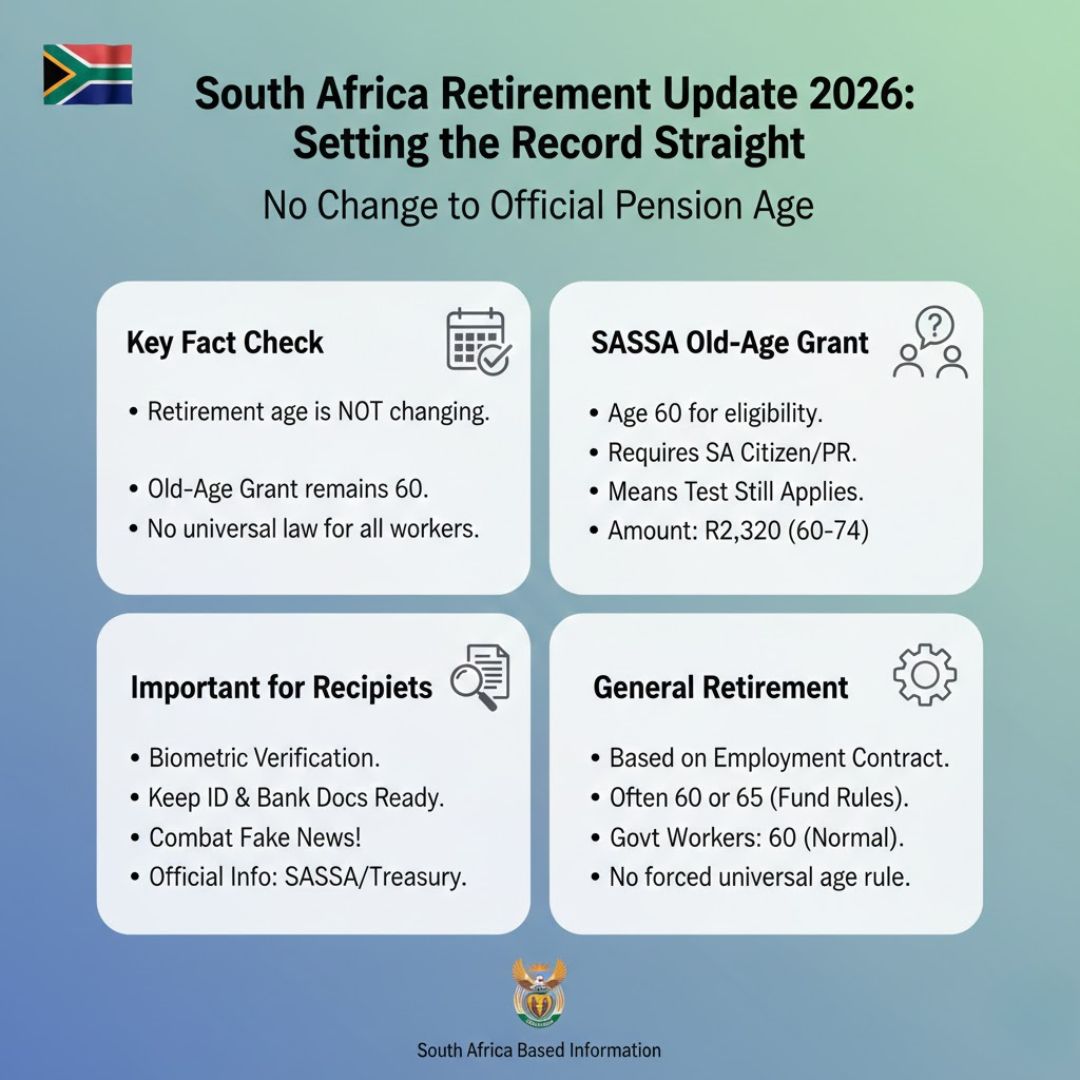
| Category | Previous Rule | New Rule (2026) |
|---|---|---|
| Standard Retirement Age | 60 years | Higher than 60 |
| Start Date | Before 2026 | 26 January 2026 |
| Transitional Measures | Not applicable | Available for near-retirees |
| Pension Access | Earlier eligibility | Adjusted eligibility age |
Frequently Asked Questions (FAQs)
1. Does retirement at 60 completely end in South Africa?
No, transitional rules may still apply for certain workers nearing retirement.
 SASSA SRD Grant 2026 Ending After March: Separating Facts Rumours and Official Deadline Information
2. When do the new pension age rules take effect?
The revised rules begin from 26 January 2026.
3. Will pensions increase if retirement is delayed?
In many cases, longer contribution periods can lead to higher payouts.
4. Who should review their retirement plans now?
Anyone aged 50 and above should reassess savings and work plans early.