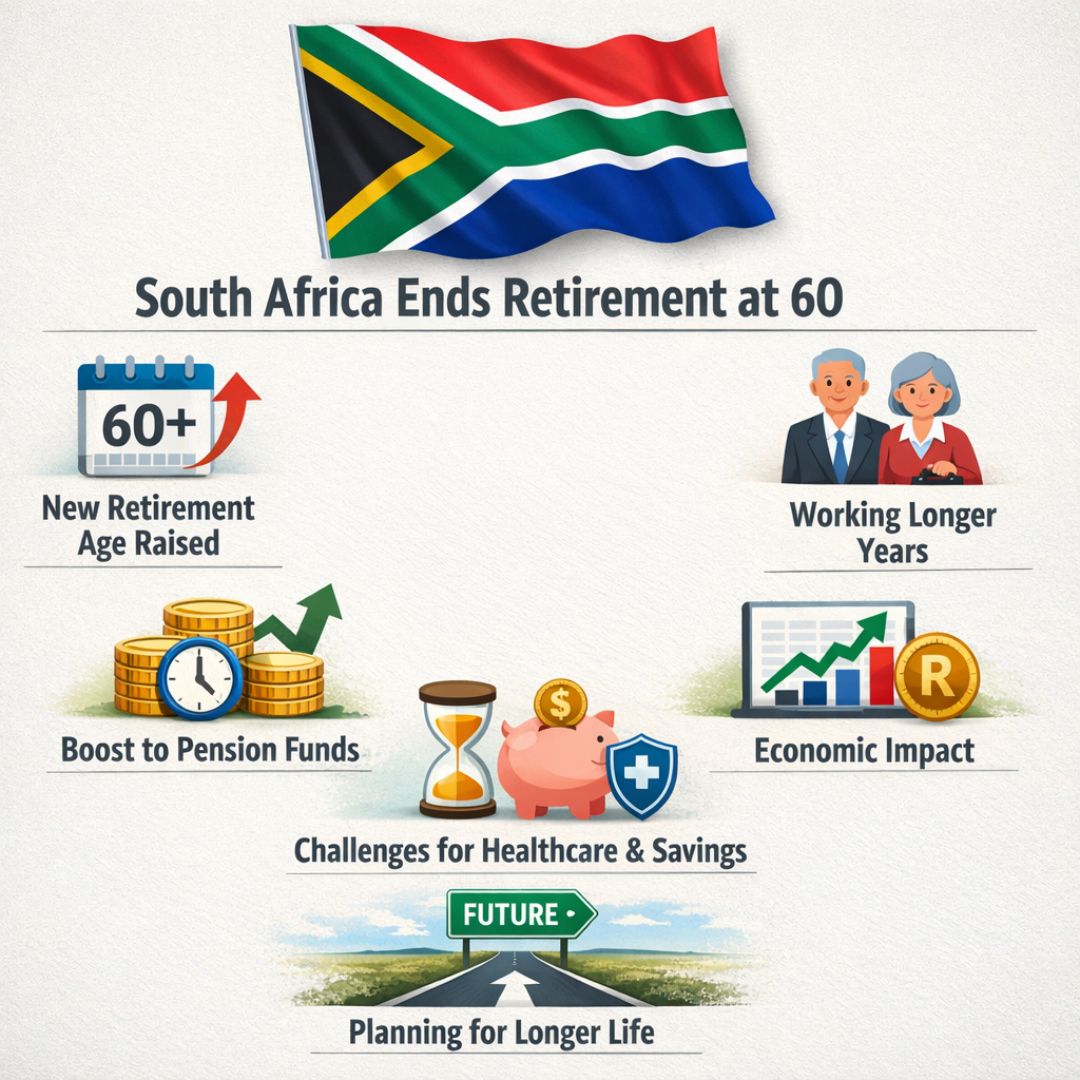
As early as 2026, South Africa’s retirement and pension landscape will begin moving away from the long-standing tradition of retiring at 60. For decades, the age of 60 played a central role in how workers planned their careers, savings, and long-term financial security. However, shifting economic realities and longer life expectancy have pushed the country to rethink and restructure its retirement norms nationwide.

Why South Africa Is Raising the Retirement Age
One of the primary drivers behind this change is the increase in average life expectancy among South Africans compared to earlier generations. While this is a positive development, it places growing pressure on pension systems that must support retirees for longer periods. Extending working years helps improve the long-term sustainability of pension funds by allowing individuals to contribute for more years before drawing benefits. Rising healthcare costs and increasing pressure on public finances have also played a significant role in shaping this policy shift.

What the New Retirement Rules Mean
From 2026, the traditional default retirement age of 60 will be phased out across most sectors. Instead, the standard retirement age will move closer to 65, depending on employment contracts and specific pension fund regulations. Although early retirement may still be possible in some cases, it often comes with reduced benefits. Pension payouts will be adjusted to reflect longer payment durations, meaning that retiring earlier could result in noticeably lower monthly income.

Impact on Workers and Employees
Employees approaching retirement will need to reassess their plans. Those who had expected to retire at 60 may now need to remain employed for several additional years to qualify for full pension benefits. On the positive side, extended working years provide more time to build retirement savings and reduce the risk of outliving one’s income. However, this shift also requires careful consideration of health, career flexibility, and long-term financial planning.
 SASSA Bonus Grant 2026: Expected Payment Dates Amount Limits and Qualifying Conditions Explained
Differences Between Public and Private Sector
The impact of the new retirement age differs between the public and private sectors. In the public sector, many pension funds are already in the process of gradually adopting the higher retirement age. In contrast, parts of the private sector may continue to allow retirement at 60, depending on employer policies and pension fund rules. As a result, employees are strongly advised to review their employment contracts and pension documentation to understand how these changes apply to their individual circumstances.