South African workers are preparing for a noticeable shift in their payslips as the government moves to overhaul long-standing Unemployment Insurance Fund (UIF) rules. The updated contribution rate structure is designed to modernise the system, improve long-term sustainability, and better reflect today’s labour market realities. While the changes may appear modest at first glance, they directly affect monthly take-home pay and employer payroll costs. Understanding how these new UIF contribution rules work is essential for employees and businesses alike as South Africa adjusts its social security safety net.

New UIF Contribution Rate Changes and Monthly Pay Impact
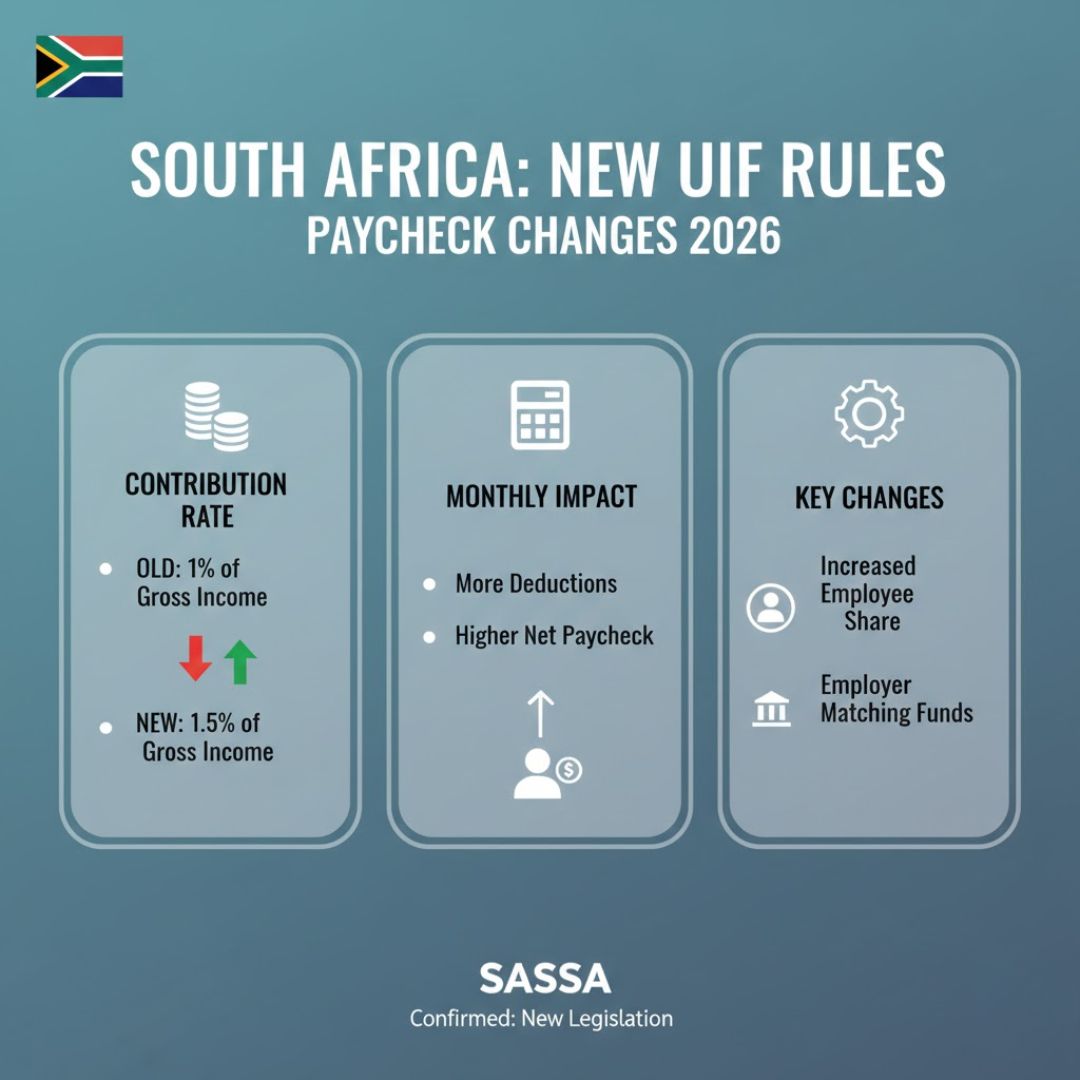
The revised UIF contribution rates are expected to slightly alter how much workers see deducted from their salaries each month. For many employees, the adjustment means a recalculation of monthly deductions that could either increase or stabilise contributions depending on income levels. Employers will also need to update payroll systems to ensure accurate payroll processing from the effective date. While the aim is fairness, some workers may initially feel the pinch as take-home pay shifts. Over time, however, policymakers argue the changes will create a more balanced fund that can reliably support those facing job losses or reduced working hours.

How Updated UIF Rules Reshape Worker and Employer Responsibilities
Beyond payslips, the new UIF rules redefine shared responsibilities between employers and employees. Businesses must stay compliant by applying the correct rates and submitting contributions on time, reducing the risk of penalties linked to compliance obligations. Employees, on the other hand, benefit from clearer contribution records, which support smoother claims during unemployment periods. The government believes this reset strengthens social security protection while maintaining affordability. By closing loopholes and updating thresholds, the system aims to ensure fair contribution sharing without placing undue pressure on either side of the employment relationship.

Why South Africa Is Moving Away From Old UIF Contribution Rules
The decision to retire outdated UIF rules reflects broader economic and workforce changes across South Africa. Rising informal employment, wage inequality, and economic shocks exposed weaknesses in the old model. The new structure focuses on long-term fund stability and better alignment with modern earnings patterns. Officials argue that without reform, the UIF risked falling behind future demand. By refreshing contribution rates now, the country aims to build a system capable of handling future unemployment risks while ensuring policy sustainability goals are met in a challenging economic environment.
What the UIF Contribution Changes Mean Going Forward
Looking ahead, the UIF contribution overhaul signals a more proactive approach to worker protection in South Africa. Although some employees may notice small changes in deductions, the broader intent is resilience rather than immediate relief. A better-funded UIF can respond faster during economic downturns, offering greater peace of mind. Employers also gain clarity through simplified rules and predictable costs. Ultimately, these reforms represent a shift toward system-wide resilience, encouraging financial preparedness and reinforcing the role of UIF as a cornerstone of worker income support in uncertain times.
| Category | Old UIF Rules | New UIF Rules |
|---|---|---|
| Contribution Rate | Fixed percentage | Adjusted percentage |
| Payroll Handling | Manual updates | Revised payroll systems |
| Employee Impact | Stable deductions | Recalculated deductions |
| Fund Sustainability | Limited growth | Improved long-term balance |
Frequently Asked Questions (FAQs)
1. When do the new UIF contribution rates take effect?
The updated rates apply from the officially announced implementation date set by authorities.
 SASSA R2,315 January Pension: Full Payment Dates Banking Options and Collection Guidance Explained
2. Will all workers pay more UIF contributions?
No, the impact depends on income level and how the revised rates apply.
3. Do employers need to take action?
Yes, employers must update payroll systems to remain compliant.
4. Will UIF benefits change because of the new rules?
Benefit structures remain largely the same, but funding stability is expected to improve.