From 28 January 2026, South Africa’s electricity consumers are seeing a major shake-up as revised prepaid meter billing charges officially take effect. The changes are designed to close long-standing loopholes that allowed uneven billing, unpredictable deductions, and confusion around how prepaid electricity was priced. For households already under pressure from rising living costs, the new rules aim to bring clearer pricing, fairer usage tracking, and improved accountability. While the adjustments may initially feel disruptive, authorities say they are necessary to stabilise the system and restore trust in prepaid electricity billing across the country.

Revised prepaid electricity billing charges explained
The revised prepaid electricity billing charges focus on eliminating inconsistencies that previously benefited some users while disadvantaging others. Under the new structure, tariffs are applied more transparently, reducing sudden balance drops that often shocked consumers. This approach prioritises billing transparency, strengthens meter accuracy, and improves usage visibility for everyday households. Utilities have also streamlined how service fees are deducted, making it easier to understand where each rand goes. For many users, the biggest change will be more predictable consumption patterns, helping families plan monthly electricity spending without unpleasant surprises.

How prepaid meter loopholes are being closed
For years, prepaid systems allowed certain technical gaps that resulted in uneven charges or delayed fee recovery. The updated rules directly address these issues by enforcing uniform tariff steps, tighter system compliance, and clearer daily charge rules. These measures ensure that all consumers are billed using the same standards, regardless of location or meter type. Authorities believe this will discourage misuse, reduce disputes, and create a more stable revenue base for electricity providers. While some users may notice slightly higher deductions upfront, the long-term goal is fairness across the entire prepaid network.

What the 28 January 2026 electricity changes mean for households
For households, the new electricity billing rules mean fewer surprises and better control over consumption. The updated system encourages responsible energy use, supports budget planning, and promotes fair cost sharing among users. Consumers are advised to monitor their meters closely during the first few weeks to understand how deductions now work. Education campaigns are also rolling out to help users adapt. Although adjustment takes time, the changes are expected to improve trust in prepaid meters and reduce long-standing complaints about unclear charges.
Overall impact and forward outlook
Looking ahead, the revised billing structure represents a significant reset for South Africa’s prepaid electricity system. By prioritising consumer confidence, reinforcing pricing fairness, and ensuring system stability, the reforms aim to balance household needs with utility sustainability. Short-term discomfort is possible as users adjust, but the long-term benefits include clearer statements, fewer disputes, and more reliable service delivery. If implemented consistently, these changes could serve as a foundation for future energy reforms focused on transparency and accountability.
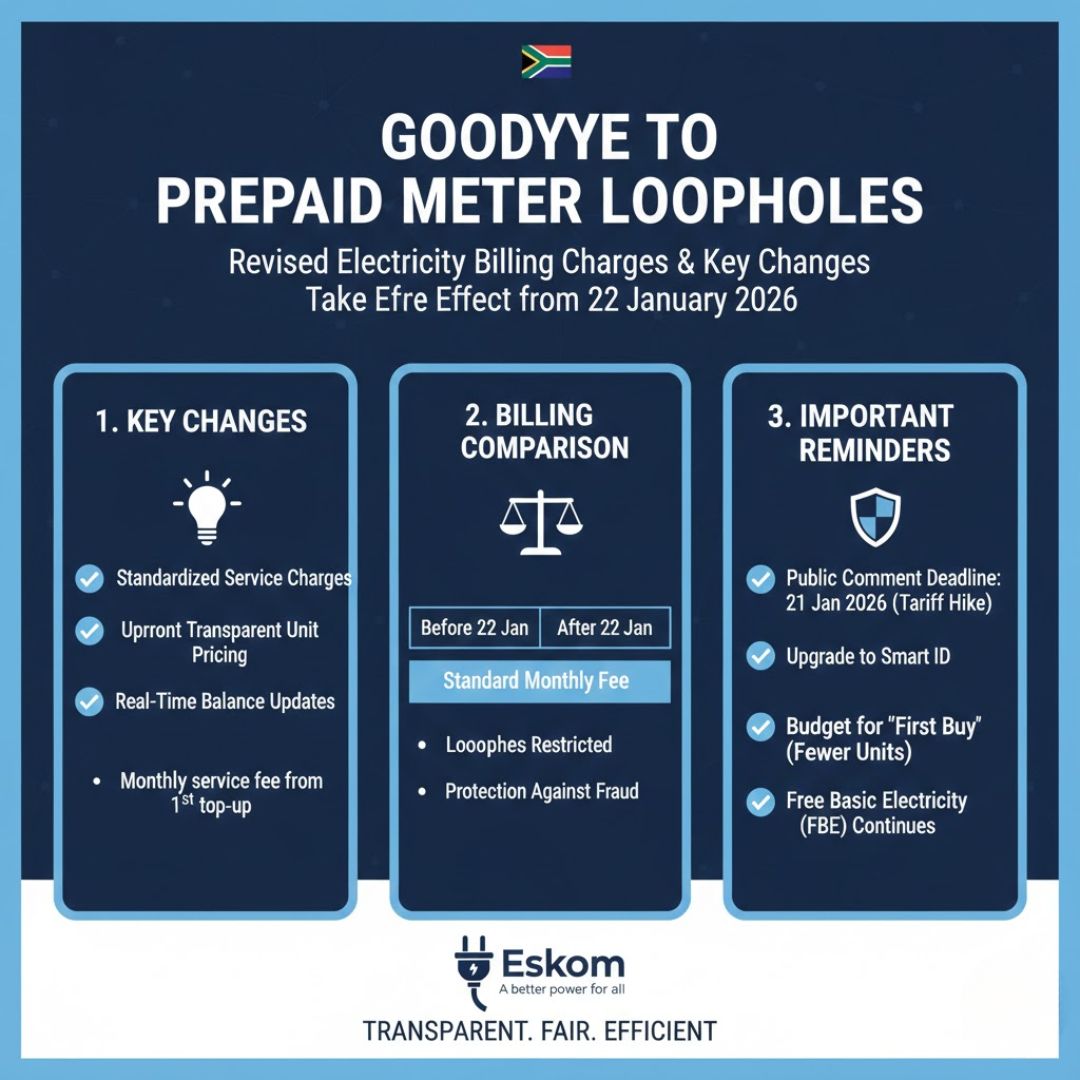
| Aspect | Before January 2026 | After January 2026 |
|---|---|---|
| Tariff application | Inconsistent tiers | Standardised tiers |
| Daily service charges | Often unclear | Clearly defined |
| Meter deductions | Unexpected drops | Predictable usage |
| Consumer visibility | Limited breakdown | Improved transparency |
Frequently Asked Questions (FAQs)
1. When do the new prepaid electricity charges start?
The revised charges take effect nationwide from 28 January 2026.

2. Will electricity become more expensive immediately?
Costs may feel different, but the aim is fairer and more predictable billing.
3. Do all prepaid meter users fall under the new rules?
Yes, the updated billing structure applies to all prepaid electricity users.
4. What should consumers do to adapt to the changes?
Monitor usage closely and review deductions to understand the new billing pattern.